Traveling to the FIFA World Cup 2026 across USA, Canada, and Mexico will be an exciting experience for football fans worldwide. However, staying connected during such a large international event is essential for navigation, communication, and planning match-day travel.
One of the most common questions travelers ask is:
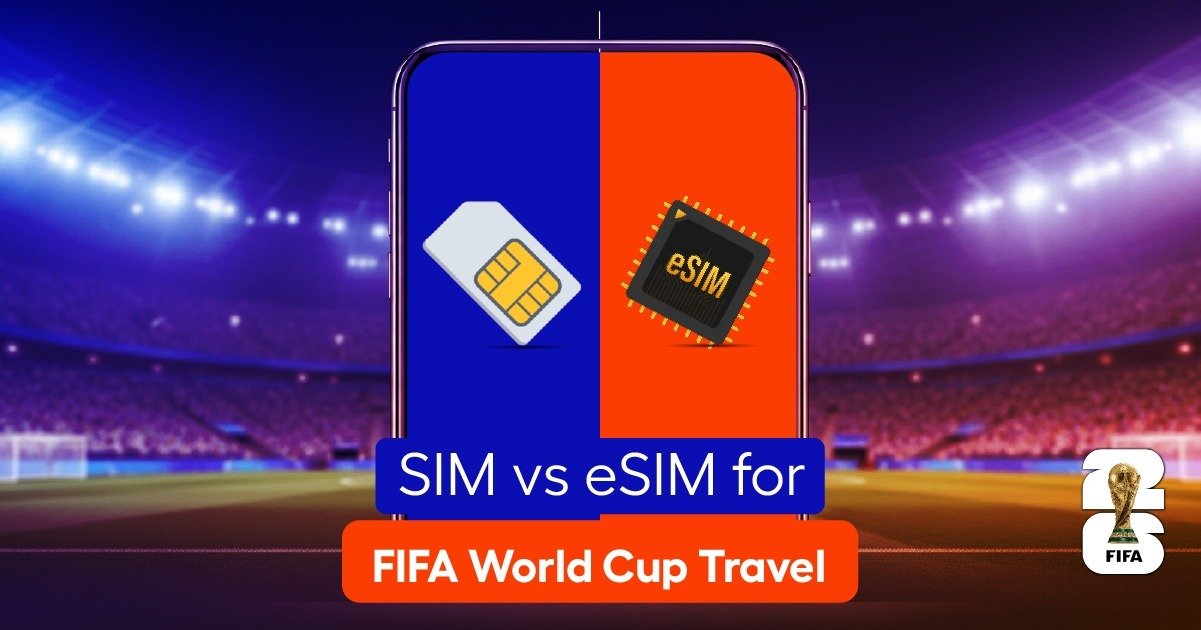
Should you use a traditional SIM card or an eSIM during FIFA World Cup travel?
Choosing the right mobile internet option helps avoid airport delays, roaming charges, and connectivity issues. In this guide, we compare SIM vs eSIM for FIFA World Cup travel, explain the key differences, and help you choose the best option for your trip.
Why Reliable Internet Is Important During FIFA World Cup Travel
Attending FIFA matches involves moving between stadiums, hotels, and city attractions. Mobile internet helps visitors stay organized and navigate unfamiliar locations.
Fans commonly use mobile internet for:
- Navigating to stadiums
- Checking match schedules
- Booking rides and transport
- Sharing match-day photos
- Communicating with friends
- Accessing digital tickets
- Finding restaurants and hotels
Without reliable connectivity, travel coordination becomes difficult, especially in crowded areas.
What Is a Physical SIM Card?
A physical SIM card is a small chip inserted into your smartphone that connects your device to a mobile network.
Travelers often purchase SIM cards at:
- Airport telecom counters
- Local mobile stores
- Shopping malls
- Convenience shops
This traditional method is still widely used.
Advantages of Physical SIM Cards for FIFA Travel
Physical SIM cards offer several benefits.
Advantages include:
- Available at most airports
- Local phone numbers included
- Suitable for older phones
- Familiar setup process
These features make physical SIM cards a reliable option.
Disadvantages of Physical SIM Cards During FIFA World Cup
During large events like the World Cup, physical SIM cards may cause delays.
Common challenges include:
- Long queues at airport counters
- Manual installation required
- Activation delays
- Risk of losing SIM cards
- Language barriers during purchase
These issues can affect travel convenience.
What Is an eSIM?
An eSIM (embedded SIM) is a digital SIM card that allows users to activate mobile internet without inserting a physical SIM.
Instead of visiting stores, users receive a QR code and install the eSIM directly on their phone.
This modern technology is becoming increasingly popular among international travelers.
Advantages of eSIM for FIFA World Cup Travel
eSIM technology offers several practical benefits.
Key advantages include:
- Instant activation
- No physical SIM required
- Setup before arrival
- No airport waiting lines
- Easy switching between networks
- Flexible short-term data plans
For international travel across multiple countries, eSIM offers unmatched convenience.
Disadvantages of eSIM
Although eSIM is convenient, there are some limitations.
Considerations include:
- Requires compatible smartphones
- Requires internet access for setup
- Not supported on older devices
Checking device compatibility before traveling is important.
SIM vs eSIM for FIFA World Cup Travel: Side-by-Side Comparison
Here is a simple comparison to help travelers understand the key differences.
| Feature | Physical SIM | eSIM |
| Setup Time | Slow | Fast |
| Airport Waiting | Yes | No |
| Installation | Manual | Digital |
| Risk of Loss | Yes | No |
| Flexibility | Limited | High |
| Convenience | Moderate | Very High |
| Multi-Country Travel | Limited | Easy |
This comparison shows why many international travelers are switching to eSIM technology.
Which Option Is Faster During FIFA Arrival?
Speed matters during World Cup travel, especially when airports are crowded.
Physical SIM Setup Time
Purchasing a SIM card after arrival involves:
- Waiting in line
- Identity registration
- Manual installation
- Activation time
During major events, waiting times can increase significantly.
eSIM Setup Speed
eSIM activation is much faster.
Travelers can:
- Install before departure
- Activate instantly
- Connect immediately upon arrival
This saves valuable time during travel.
Cost Comparison: SIM vs eSIM for FIFA Travel
Budget is an important factor when choosing mobile internet.
Physical SIM Costs
Physical SIM plans often include:
- Local prepaid packages
- Limited data plans
- Possible activation charges
Prices vary depending on location and demand.
eSIM Costs
eSIM plans typically offer:
- Flexible data packages
- Short-term options
- Easy top-up features
For short-term travel like FIFA events, eSIM can be cost-effective.
Which Option Works Better Across Multiple Countries?
The FIFA World Cup 2026 involves travel across USA, Canada, and Mexico.
Multi-country connectivity is important.
Physical SIM Limitations
Physical SIM cards are usually country-specific.
Travelers may need:
- Separate SIM cards
- Multiple installations
- Additional costs
This can be inconvenient during multi-country travel.
eSIM Multi-Country Benefits
Many eSIM plans support:
- Cross-border connectivity
- Seamless network switching
- Continuous internet access
This makes eSIM highly suitable for international events.
When Should You Choose a Physical SIM?
Physical SIM cards may be suitable if:
- Your phone does not support eSIM
- You prefer traditional installation
- You need long-term local service
- You are comfortable waiting at airport counters
This option still works for many travelers.
When Should You Choose an eSIM?
eSIM is often the better choice if:
- Your phone supports eSIM
- You want instant connectivity
- You plan multi-country travel
- You want to avoid airport queues
- You prefer digital setup
Most modern travelers prefer eSIM for convenience.
Common Mistakes to Avoid When Choosing Internet
Avoid these common mistakes:
- Waiting until arrival to activate internet
- Choosing insufficient data plans
- Ignoring device compatibility
- Relying only on WiFi
- Using expensive roaming plans
Planning ahead prevents connectivity issues.
Tips for Choosing the Best Option for FIFA Travel
Before deciding, consider:
- Device compatibility
- Trip duration
- Countries you will visit
- Daily internet usage
- Budget
Selecting the right option ensures smoother travel.
Frequently Asked Questions About SIM vs eSIM for FIFA Travel
Is eSIM Better Than Physical SIM for FIFA World Cup Travel?
For most travelers, eSIM offers faster setup and better flexibility.
Can I Use Both SIM and eSIM Together?
Yes. Many smartphones support both simultaneously.
Is eSIM Reliable Across FIFA Host Countries?
Yes. Most eSIM services support networks across USA, Canada, and Mexico.
What If My Phone Does Not Support eSIM?
In that case, using a physical SIM card is the best alternative.
Should I Activate Internet Before Arrival?
Yes. Activating before arrival saves time and prevents delays.
Final Thoughts: SIM vs eSIM for FIFA World Cup 2026
Choosing between a physical SIM card and an eSIM depends on your device compatibility and travel preferences. However, for most international travelers attending the FIFA World Cup 2026, eSIM offers faster activation, greater flexibility, and better convenience.
Preparing your internet connection before departure helps ensure smooth travel between cities and stadiums, allowing you to focus on enjoying the matches rather than worrying about connectivity.