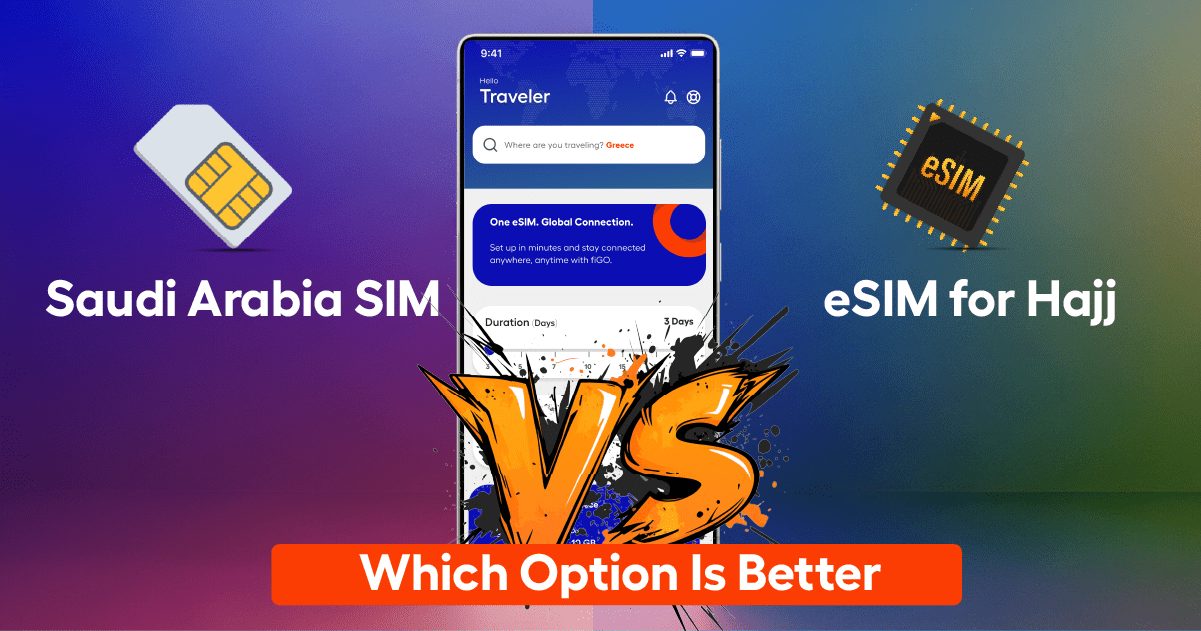
Staying connected during Hajj is essential for navigation, communication, and coordination. Pilgrims traveling to Saudi Arabia often face an important decision: Should you use a traditional SIM card or switch to an eSIM for Hajj?
With millions of pilgrims arriving during Hajj season, mobile connectivity becomes a critical part of the journey. Choosing the right internet option helps avoid long queues, delays, and unexpected roaming costs.
In this guide, we compare Saudi Arabia SIM vs eSIM for Hajj, explaining the differences, advantages, and which option works best for pilgrims traveling to Makkah, Mina, Arafat, and Madinah.
Why Choosing the Right Internet Option Matters During Hajj
Hajj involves moving between multiple locations with large crowds. Reliable communication helps pilgrims:
- Navigate unfamiliar areas
- Stay connected with group leaders
- Share location with family
- Access travel schedules
- Use navigation tools
- Receive emergency updates
Selecting the right connectivity method ensures smooth coordination throughout the pilgrimage.
What Is a Physical SIM Card?
A physical SIM card is a small chip inserted into your phone that connects your device to a local mobile network.
Many pilgrims purchase local SIM cards at Saudi airports or telecom shops.
Advantages of Physical SIM Cards
Physical SIM cards remain a common option among travelers.
Benefits include:
- Widely available at airports
- Local network access
- In-person support available
- Suitable for basic connectivity needs
Disadvantages of Physical SIM Cards During Hajj
During Hajj season, physical SIM cards can create delays and inconvenience.
Common challenges include:
- Long waiting lines at airport counters
- Time-consuming activation
- Limited availability during peak periods
- Risk of losing the SIM card
- Language barriers during purchase
These issues can delay internet access during arrival.
What Is an eSIM?
An eSIM (embedded SIM) is a digital SIM card that allows you to activate mobile service without inserting a physical SIM.
Instead of visiting a store, you receive a QR code and install the eSIM directly on your phone.
Advantages of eSIM for Hajj Pilgrims
Many modern travelers prefer eSIM technology because it simplifies travel preparation.
Benefits include:
- Instant activation
- No physical installation required
- Setup before departure
- No airport waiting lines
- Easy switching between plans
- Reduced risk of losing SIM cards
These advantages make eSIM highly suitable during busy Hajj travel periods.
Disadvantages of eSIM
Although eSIM is convenient, there are a few limitations.
Considerations include:
- Requires compatible smartphones
- Requires internet access for installation
- Not supported by older devices
Checking device compatibility before travel is important.
Saudi Arabia SIM vs eSIM for Hajj: Side-by-Side Comparison
Here is a simple comparison to help pilgrims understand the key differences.
| Feature | Physical SIM | eSIM |
| Setup Time | Slow | Fast |
| Airport Waiting | Yes | No |
| Installation | Manual | Digital |
| Convenience | Moderate | High |
| Risk of Loss | Yes | No |
| Activation | Delayed | Instant |
| Flexibility | Limited | High |
This comparison highlights why many pilgrims prefer eSIM solutions.
Which Option Is Faster During Hajj Arrival?
Speed matters during Hajj arrival, especially at busy airports.
Physical SIM Setup Time
Purchasing a SIM card at the airport can take time due to:
- Long queues
- Identity verification
- Manual activation
- Staff availability
During peak hours, waiting times can increase significantly.
eSIM Setup Speed
eSIM activation is much faster.
You can:
- Install before departure
- Activate instantly upon arrival
- Connect immediately
This saves valuable time during travel.
Cost Comparison: SIM vs eSIM During Hajj
Cost is another important factor when choosing between SIM and eSIM.
Physical SIM Costs
Physical SIM cards often include:
- Local pricing plans
- Activation fees
- Limited data options
Costs vary depending on provider and demand.
eSIM Costs
eSIM plans typically offer:
- Flexible pricing
- Short-term packages
- Easy top-up options
For short-term travel like Hajj, eSIM can be cost-effective.
Reliability During Hajj Crowds
Network reliability is critical during large gatherings.
Both SIM and eSIM connect to local networks, but convenience differs.
Reliable connectivity is especially important in:
- Makkah
- Mina
- Arafat
- Muzdalifah
Choosing a well-supported mobile plan improves performance in crowded areas.
When Should You Choose a Physical SIM?
Physical SIM cards may be suitable if:
- Your phone does not support eSIM
- You prefer in-person activation
- You need long-term local service
- You are comfortable waiting at airport counters
This option still works for many travelers.
When Should You Choose an eSIM?
eSIM is often the better choice if:
- Your phone supports eSIM
- You want instant connectivity
- You want to avoid airport queues
- You prefer digital setup
- You want quick activation
Most modern travelers find eSIM easier to use.
Internet Usage Areas During Hajj
Mobile internet is used across several key locations.
These include:
- Makkah
- Mina
- Arafat
- Muzdalifah
- Madinah
Reliable connectivity improves safety and communication across these areas.
Tips to Choose Between SIM and eSIM
Before making your decision, consider:
- Phone compatibility
- Trip duration
- Internet usage habits
- Budget
- Travel schedule
Selecting the right option helps prevent connectivity issues.
Common Mistakes to Avoid When Choosing Internet
Avoid these common mistakes:
- Buying SIM without checking compatibility
- Waiting until arrival to activate service
- Choosing insufficient data
- Ignoring installation instructions
- Relying only on Wi-Fi
Planning ahead ensures smoother travel.
Frequently Asked Questions About SIM vs eSIM for Hajj
Is eSIM Better Than Physical SIM for Hajj?
For most pilgrims, eSIM offers faster activation and greater convenience.
Can I Use Both SIM and eSIM Together?
Yes. Many phones allow both to be used simultaneously.
Is eSIM Reliable During Hajj?
Yes. eSIM connects to the same local networks as physical SIM cards.
What If My Phone Does Not Support eSIM?
In that case, using a physical SIM card is the best alternative.
Should I Activate Internet Before Arrival?
Yes. Activating before arrival helps avoid delays.
Final Thoughts: SIM vs eSIM for Hajj 2026
Choosing between a physical SIM card and an eSIM depends on your device compatibility and travel preferences. However, for most modern travelers, eSIM provides faster activation, greater flexibility, and improved convenience.
Selecting the right connectivity option ensures that you stay connected throughout Makkah, Mina, Arafat, and Madinah, helping you focus on your pilgrimage without worrying about communication issues.
Preparing in advance and choosing the right mobile internet solution makes the Hajj journey safer, more organized, and less stressful.